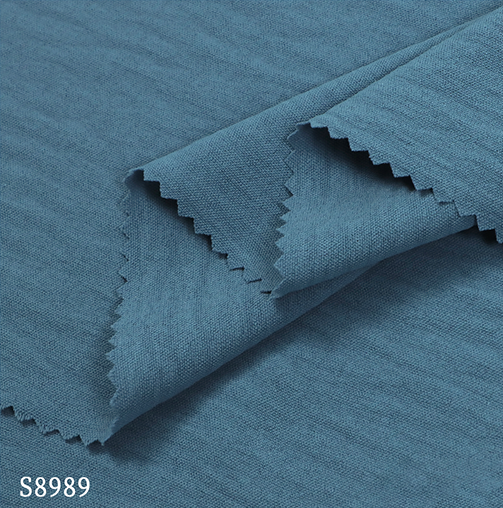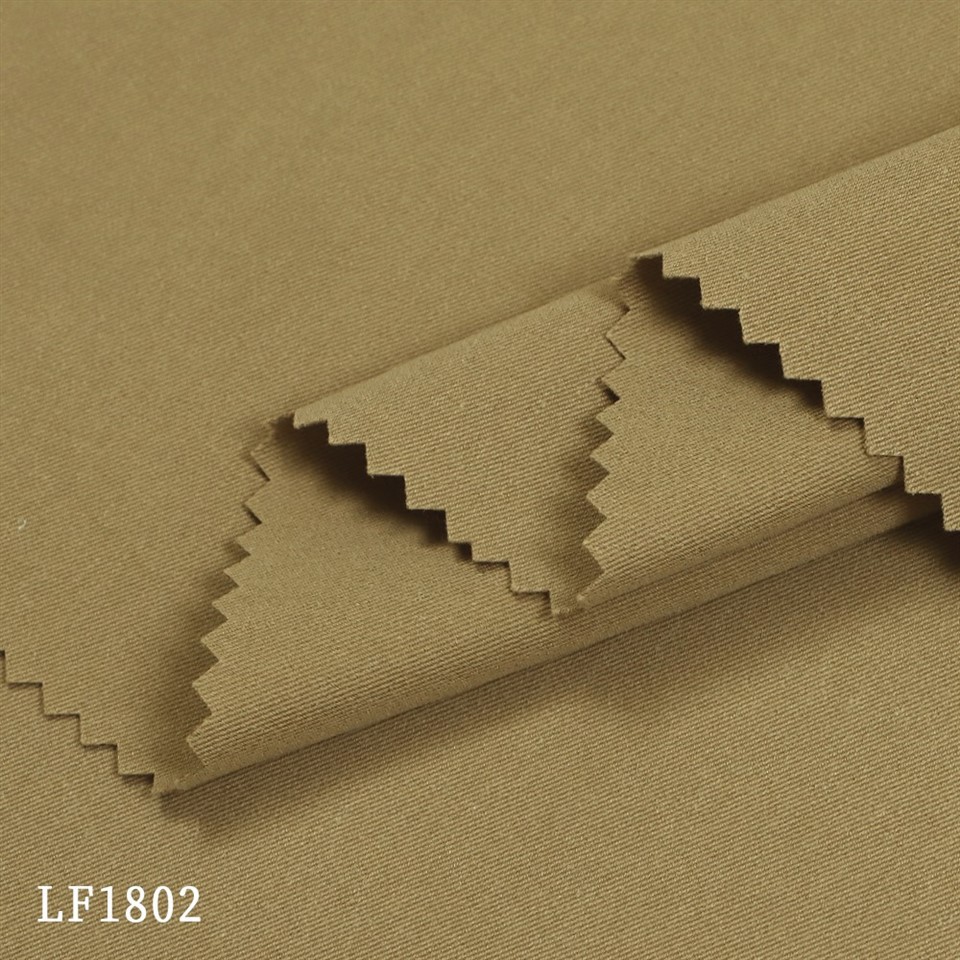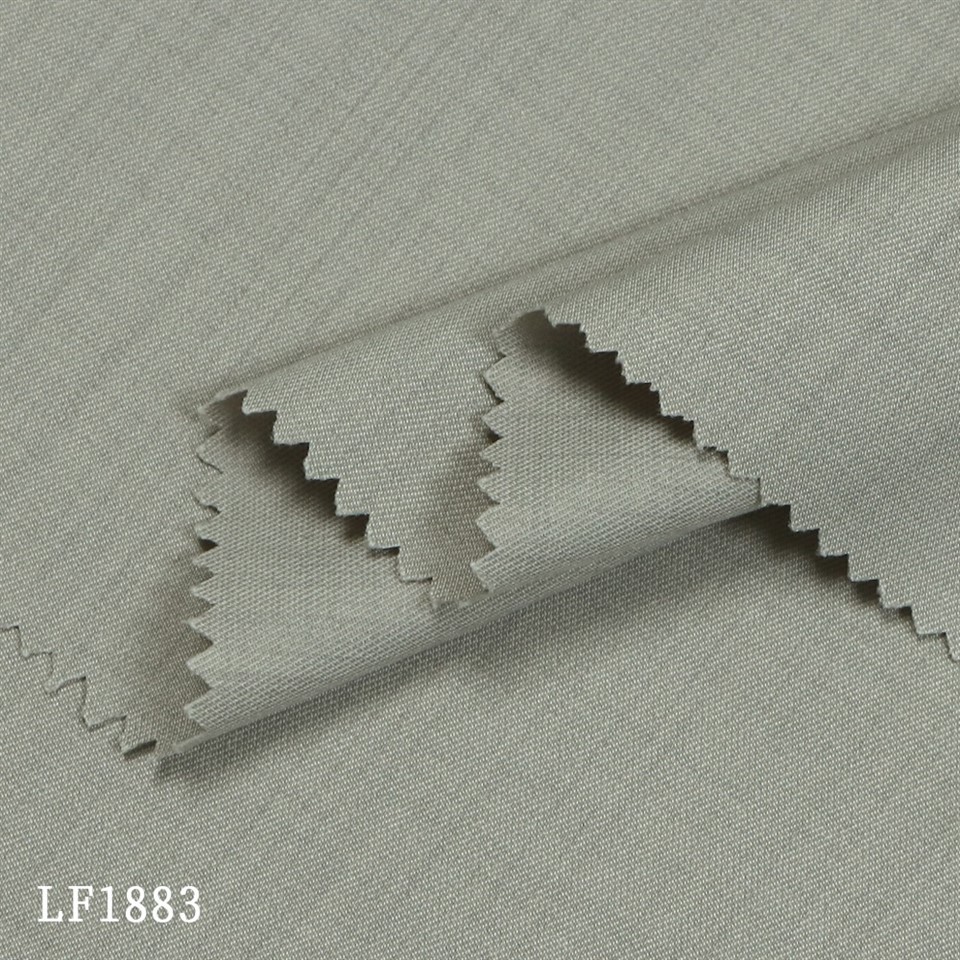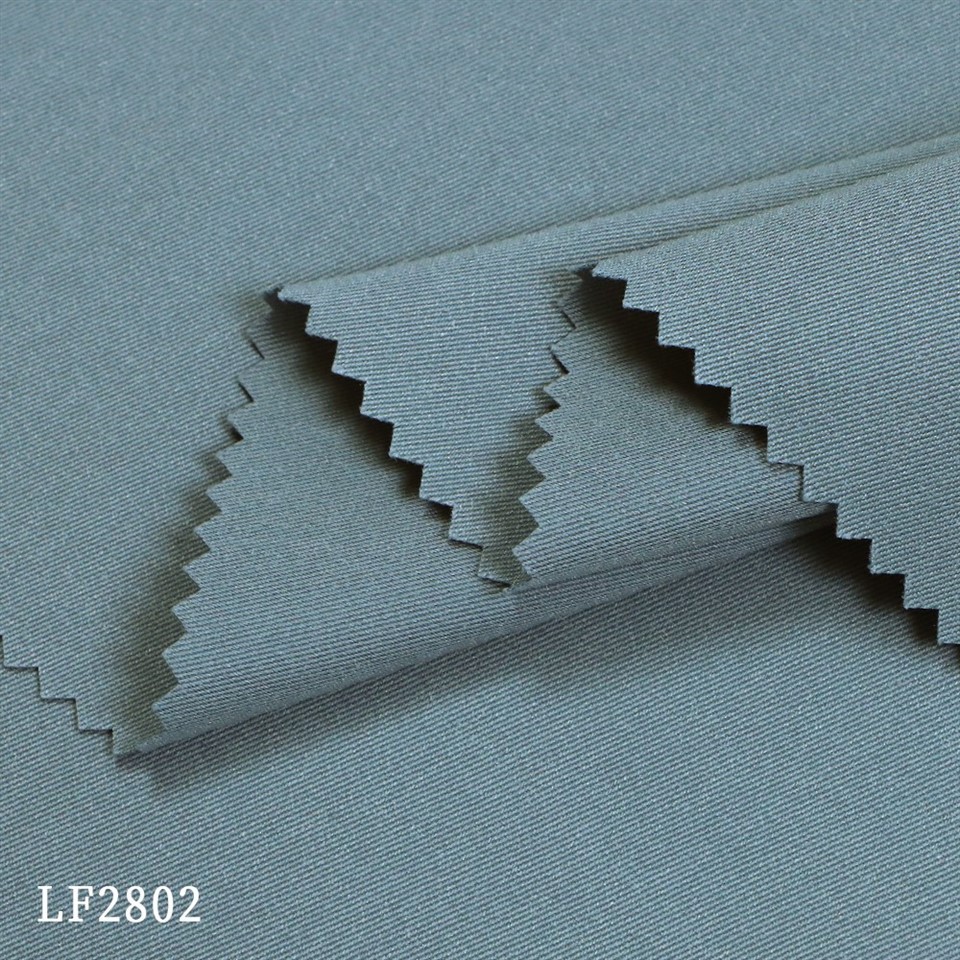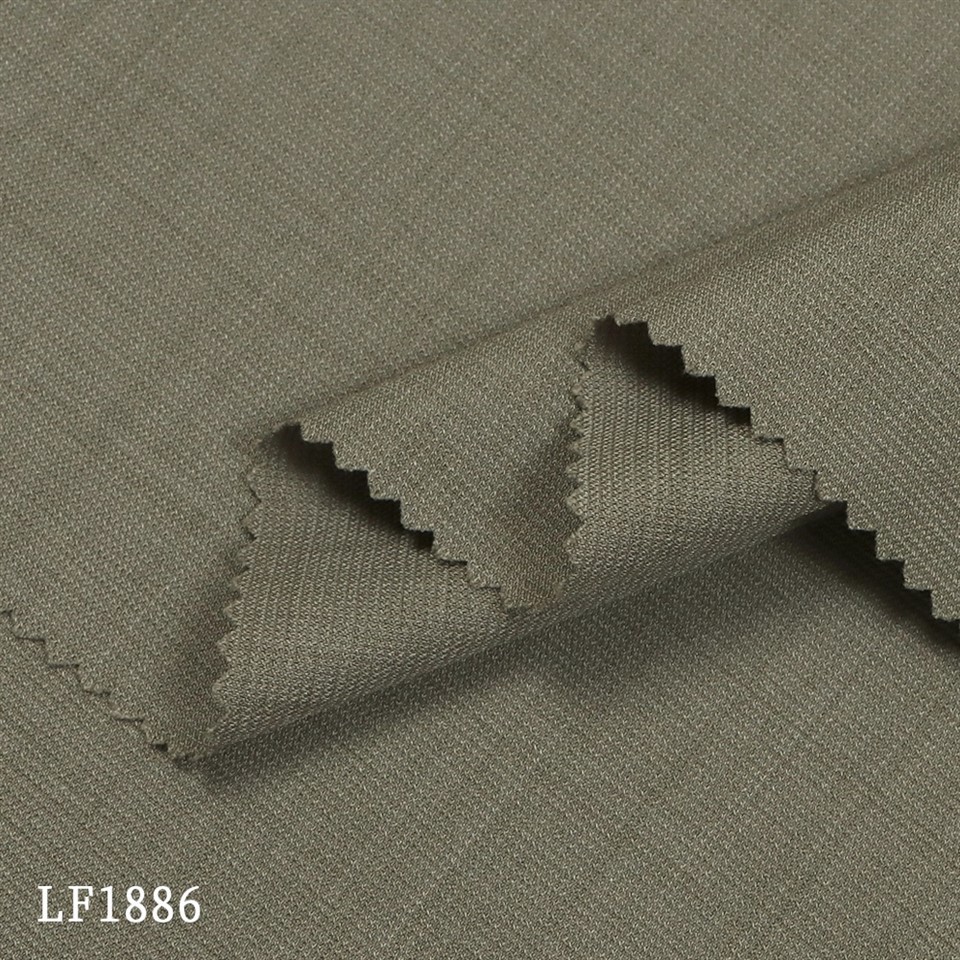
Choosing the right plain woven fabric is ultimately an application decision. The same mill may offer a 65 GSM cotton-like DTY plain, a 170 GSM 4-way stretch crepe and a 330 GSM weft-stretch double weave - each engineered for a different garment. This guide maps common constructions to applications, based on how leading Shaoxing mills actually build their ranges.
Down jackets and sun-protection clothing: ultra-light plains (60–80 GSM).
At 65 GSM with fine 30D×30D+30D yarns, cotton-like DTY plain fabric is light, downproof and comfortable against the skin. The cotton-like hand feel matters commercially: consumers get cotton comfort without cotton's weight, moisture retention and slow drying.
Trench coats and outerwear: mid-weight finished plains (100–120 GSM).
Constructions like 80S×75D or 80S×200D+50D cotton-like plain fabrics, treated with DWR (durable water repellent) and anti-static agents, provide high-density wind resistance with a soft touch. Adding a heavier 80S×200D weft gives the body and drape a trench coat needs to hold its silhouette.
Pants, skirts and dresses: stretch and crepe plains (125–175 GSM).
4-way stretch CEY fabrics (180D×180D, 160–170 GSM) deliver multi-directional comfort and a bouncy, draped hand - ideal for fitted pants and skirts. Crepe constructions (60S×60S at 125 GSM, or 40S×150D at 175 GSM with water repellency) add surface texture, wrinkle recovery and premium visual depth. Anti-static finishing is essential for polyester bottoms.
Structured outerwear and heavy bottoms: double weave (300+ GSM).
A 330 GSM weft-stretch double weave (135D×160D) with peachy touch provides the weight, opacity and durability for autumn pants and coats while keeping comfort through weft stretch.
Shirts and suits: smooth plains and nylon blends (80–110 GSM).
Ultra-light cotton or TC blends suit crisp tailoring, while 90% nylon / 10% polyester striped plains bring a cooling, nylon-like effect to suits and bottoms with Grade 4+ color fastness for repeated laundering.
The practical takeaway for B2B buyers: start from the garment, not the fabric. Define target GSM, stretch direction, finish requirements and shrinkage limits, then ask the mill for the construction - a capable OEM/ODM partner will propose the yarn count and density to hit those numbers.